9 Lessons From Cursor's System Prompt
byteatatime.devHey! I'm a student and professional bug-creator. I like to explore new stuff, and share my experiences on this blog!
May 26 – June 1, 2025
Hey! I'm a student and professional bug-creator. I like to explore new stuff, and share my experiences on this blog!

For one of my network storage PC builds, I was looking for an alternative to Flatcar Container Linux and tried out NixOS again (after an almost 10 year break). There are many ways to install NixOS, and in this article I will outline how I like to install NixOS on physical hardware or virtual machines: over the network and fully declaratively.
J.HOMMET.NET - Humain analogue dans un monde numérique.
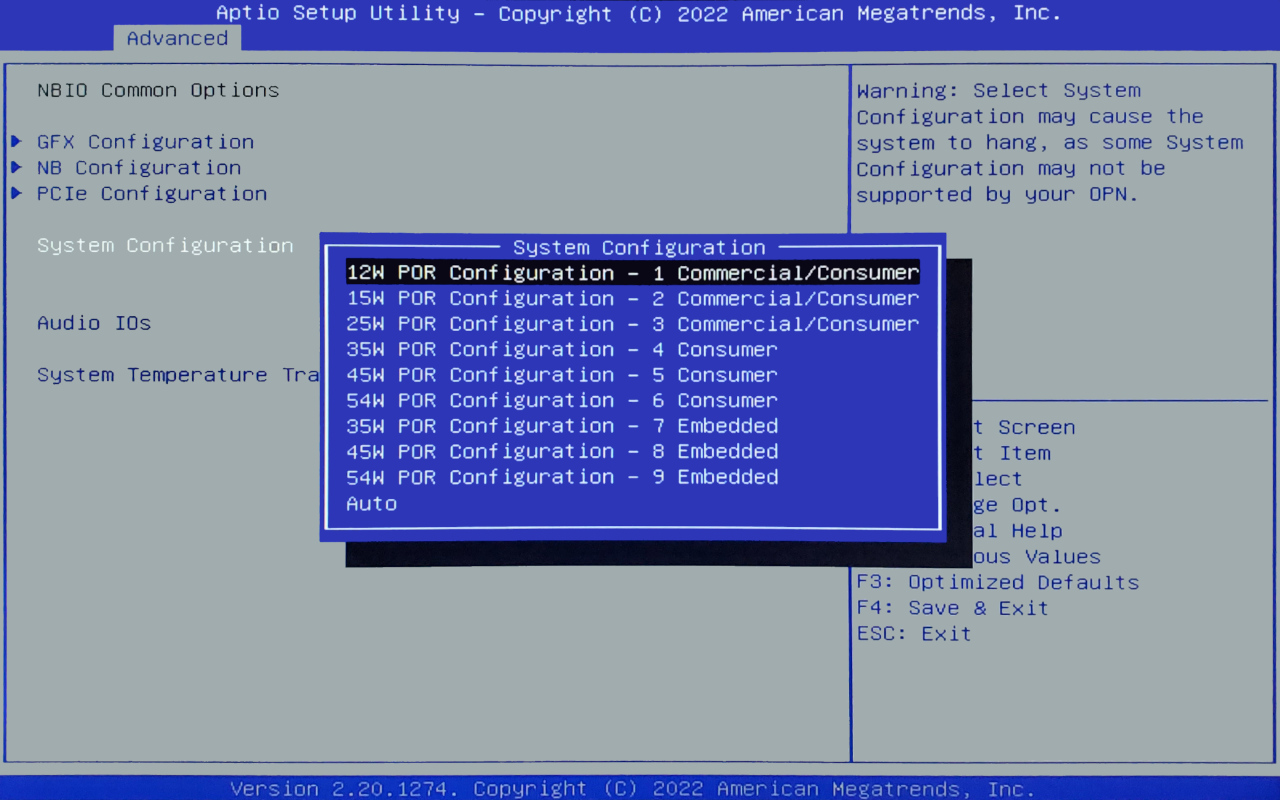
When you read my blog articles and stuff – you may get the idea that everything I do – just happens to be right and that I succeed at every attempt. This article is here to remind you t…
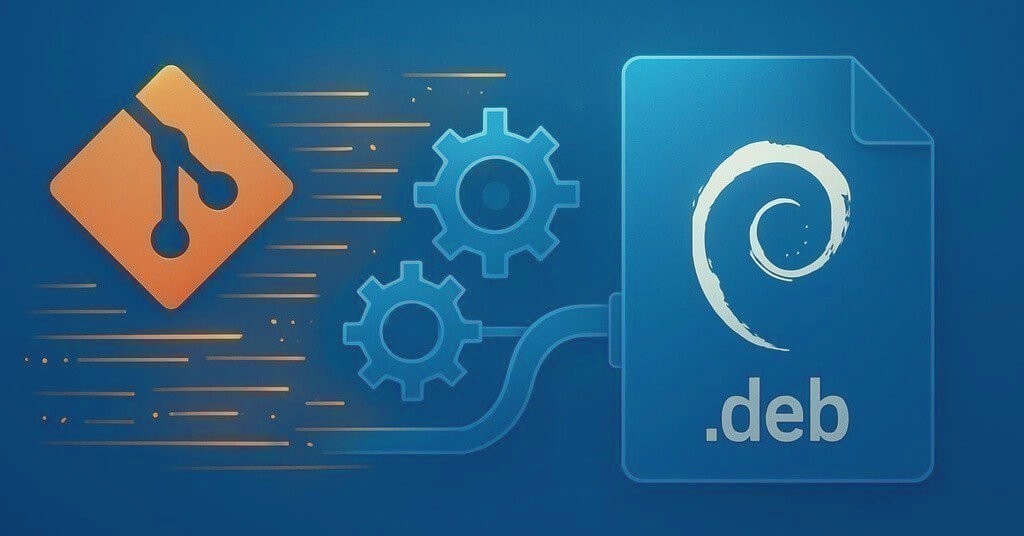
In this post, I demonstrate the optimal workflow for creating new Debian packages in 2025, preserving the upstream Git history. The motivation for this is to lower the barrier for sharing improvements to and from upstream, and to improve software provenance and supply-chain security by making it easy to inspect every change at any level using standard Git tooling.\nKey elements of this workflow include:\nUsing a Git fork/clone of the upstream repository as the starting point for creating Debian packaging repositories. Consistent use of the same git-buildpackage commands, with all package-specific options in gbp.conf. DEP-14 tag and branch names for an optimal Git packaging repository structure. Pristine-tar and upstream signatures for supply-chain security. Use of Files-Excluded in the debian/copyright file to filter out unwanted files in Debian. Patch queues to easily rebase and cherry-pick changes across Debian and upstream branches. Efficient use of Salsa, Debian’s GitLab instance, for both automated feedback from CI systems and human feedback from peer reviews. To make the instructions so concrete that anyone can repeat all the steps themselves on a real package, I demonstrate the steps by packaging the command-line tool Entr. It is written in C, has very few dependencies, and its final Debian source package structure is simple, yet exemplifies all the important parts that go into a complete Debian package:\n
An honest look at why Nix's complex but powerful approach to package management and reproducible environments is worth considering.
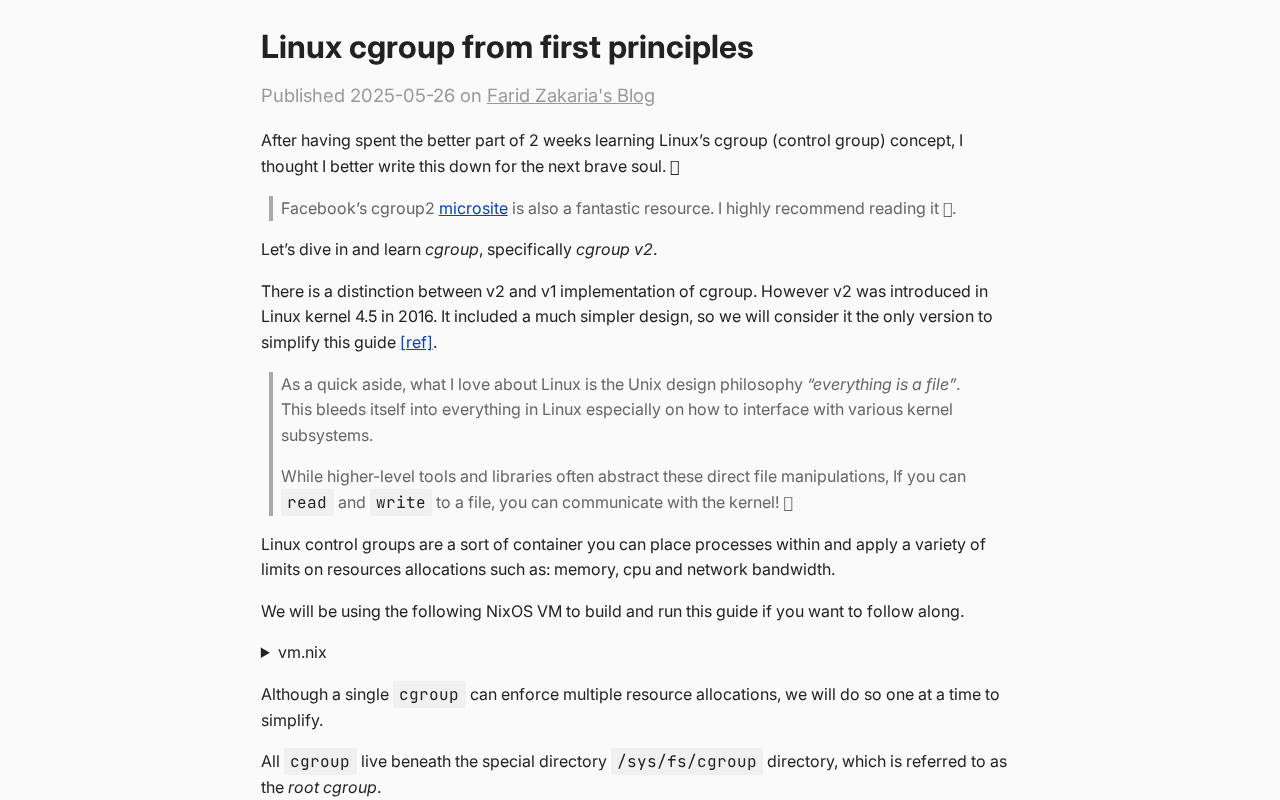
After having spent the better part of 2 weeks learning Linux’s cgroup (control group) concept, I thought I better write this down for the next brave soul. 🦸
Mostly to make use of an animation I made for a different blog post that hasn't materialised, let me take a moment to explain to you the fundamental technical difference between 'streaming' and 'downloading'. Which won't take long... because there isn't one!